The Drift of Reusable Equipment: A Returnable-Asset Control Model for UK Despatch Teams
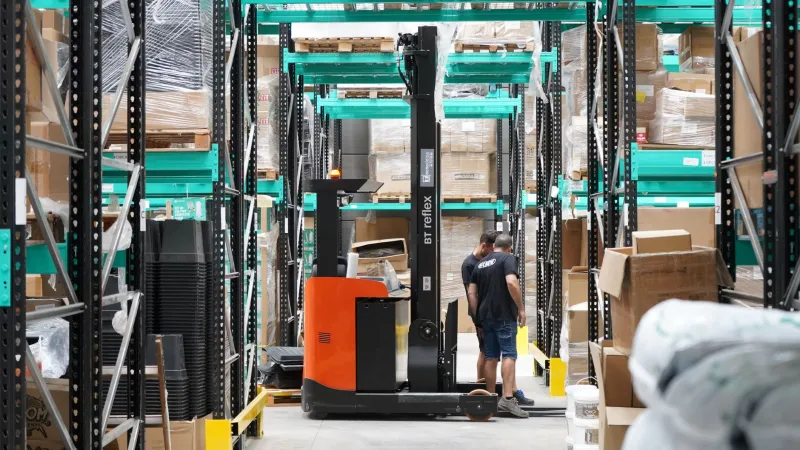
Returnable transit equipment has an awkward place in most UK despatch operations. It is too valuable to be treated as packaging, yet too ordinary to attract the attention given to vehicles, trailers or stock. Pallets, plastic crates, roll cages and tote boxes move out with goods and are expected to come back. In practice, a proportion never does. The loss is rarely recorded as a single event. It appears as a slow reduction in available equipment, followed by replacement orders that are absorbed into general overheads.
For despatch teams preparing for the 2026 peak, that drift deserves a tighter control model. Returnable assets are part of the distribution system, not a background consumable. The aim is not to track every item to an unreasonable level of detail, but to establish who owns each asset class, where custody changes and how quickly a missing container becomes a measurable cost.
Begin with ownership, not technology
Many returnable-asset projects start with labels, scanners or software. A more useful starting point is ownership. Each asset class should have a named owner, a replacement value and a clear rule for who is responsible for its return. Without that, tracking data has no financial consequence and missing equipment remains an accepted shrinkage line.
There are three broad models. In a pooled arrangement, pallets or containers are supplied through a third-party pool and the user pays for loss or late return. In an owned model, the depot buys the equipment and bears the full replacement cost. In a deposit or customer-returnable model, the customer pays a refundable charge that is credited when the asset comes back.
Each model creates different behaviour. Pooled equipment needs prompt reconciliation against hire records. Owned equipment needs an internal asset register and a replacement budget. Deposit-based equipment needs a clear schedule of charges and a disciplined credit process. A common failure is to blend the models without documenting the boundaries, so that drivers, customers and depot staff each assume someone else is responsible for the return.
For each asset class, record the owner, the unit replacement cost, the expected cycle time and the return point. A pallet might be expected back within seven days; a customer tote might be expected back on the next collection. Those expectations should be visible to the people who issue and receive the equipment.
Make every scan change custody
Scan-point reconciliation works when each scan represents a real transfer of responsibility. A common mistake is to scan equipment at every possible moment, producing a large volume of data without a clear custody chain. A leaner approach uses three control points.
First, scan or record the asset at despatch, linked to the vehicle, route and customer account. Second, record the asset at delivery or collection, ideally as part of the proof-of-delivery process. Third, record it at return to depot. For high-volume items such as standard pallets, batch counts may be more practical than item-level scanning. For higher-value totes and crates, individual labels are usually justified.
The value of the third scan is often underestimated. A returnable asset is not back in control when it reaches the customer, nor when it is loaded onto a vehicle. It is back in control when it is counted into the depot or a designated holding area. If the return scan is skipped during busy periods, the loop remains open and the asset register slowly loses credibility.
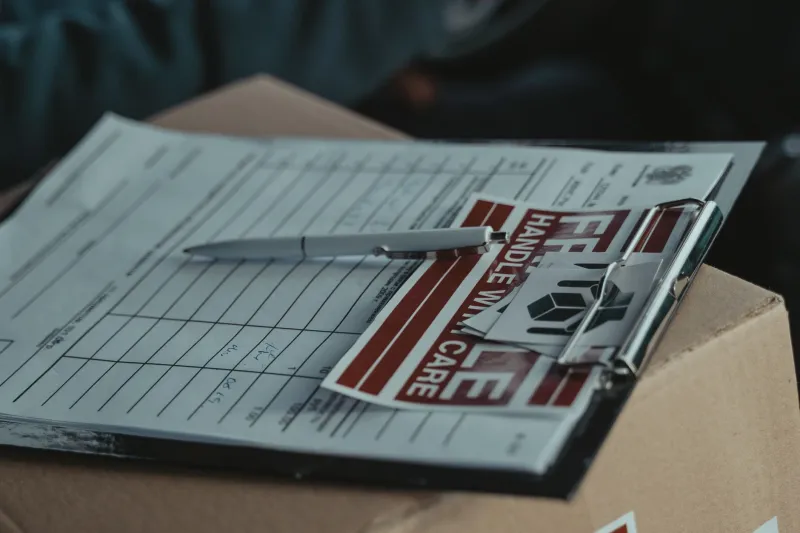
Where scanning is not yet practical, a paper or spreadsheet control can still work if it is completed at the same three points. The method matters less than the discipline of recording a custody change at each handover.
Identify the loss hotspots
Returnable equipment tends to disappear in predictable places. Customer back-of-store areas are a common hotspot, particularly where receiving staff change frequently or where crates are used for internal storage. Driver cabs and yard areas are another: equipment is unloaded but not returned to the designated bay, then becomes mixed with other equipment or left on a trailer.
Third-party depots and cross-dock sites can create ambiguity over who is holding what. Mixed loads and part-load collections make it harder to match equipment to a specific customer. Peak season adds further pressure, when temporary staff may not know the return rules and when holding areas become congested.
A useful exercise is to list the five routes, customers or sites with the largest unexplained asset variance. Visit or call those locations and ask a simple question: where does our equipment go after it is emptied? The answer often reveals a process gap rather than dishonesty. Crates may be retained because no collection has been scheduled, pallets may be removed by a third party, or totes may be sent back on a vehicle that does not record returns.
Run a monthly returnable-asset audit
The monthly audit should be simple enough to complete consistently. Start with an asset register that records opening balance, issues, returns, scrapped items and closing balance. The difference between the expected closing balance and the physical count is the variance. Value that variance at replacement cost and report it alongside other depot costs.
A practical format includes the asset type, opening count, issued count, returned count, written-off count, expected closing count, actual count and variance value. Add a column for the top three accounts or routes contributing to the variance. The report should take no more than one page and should be reviewed by both operations and finance.
Set a tolerance level. A small variance may be within normal operating loss, but a persistent variance above that level should trigger an action: a customer letter, a deposit charge, a collection run or a change to the return scan process. The audit is not an end in itself. Its purpose is to make the cost visible and to assign follow-up actions with dates.
Keep the loop visible
Returnable equipment will always be exposed to loss because it leaves the depot in someone else's hands. The objective is not zero loss; it is control. A named owner, a documented return rule, three custody points and a monthly variance report will do more than a complex tracking system that nobody maintains.
For UK despatch teams, the commercial case is straightforward. Replacement pallets, crates and totes carry a real cost, and that cost rises when equipment is bought in small emergency orders. Closing the loop is less about technology than about treating reusable equipment as an asset with a life cycle. When the monthly report shows a missing crate as a cost, the conversation changes from vague acceptance to specific action.