The Held-Parcel Ledger: Bringing Depot Exceptions Under Daily Control
The cage is a symptom, not a system
Most UK depots have one. It may be a rigid cage, a marked bay or a corner behind the returns bench. It is where parcels go when the normal flow stops: the address does not validate, the packaging has failed, the customer has refused the delivery, or the label has become unreadable. Individually, each parcel looks like a small exception. Collectively, they become unowned inventory.
The operational risk is easy to underestimate. A held parcel takes up space, but it also takes up trust. The customer is waiting, the carrier is waiting for a decision, and the depot team is waiting for someone else to act. As peak 2026 approaches, that waiting becomes expensive. A cage that was a temporary pressure valve in October can become a constraint in November.
The answer is not a blitz that clears the cage once and allows it to refill. It is a short, disciplined audit that establishes what is actually in the cage, why it is there, who owns it and when it will move. The output should be a held-parcel ledger: a simple, visible queue that behaves like any other part of the despatch operation.
Set the terms before counting
A one-week audit is enough to expose the pattern, provided the scope is tight. Appoint a single audit lead, usually a despatch supervisor or operations coordinator, and arrange for a second person to walk the cage daily. The aim is not to solve every case on day one. It is to make every case visible and assign a next action.
Before counting, define the reason codes. Keep them few enough to use consistently. A workable set is: address query, damaged packaging, refused delivery, payment or customs hold, restricted item, unknown or unlabelled, and awaiting customer instruction. Add a separate code for parcels that are simply lost within the depot process, because those are a different problem from customer-driven exceptions.
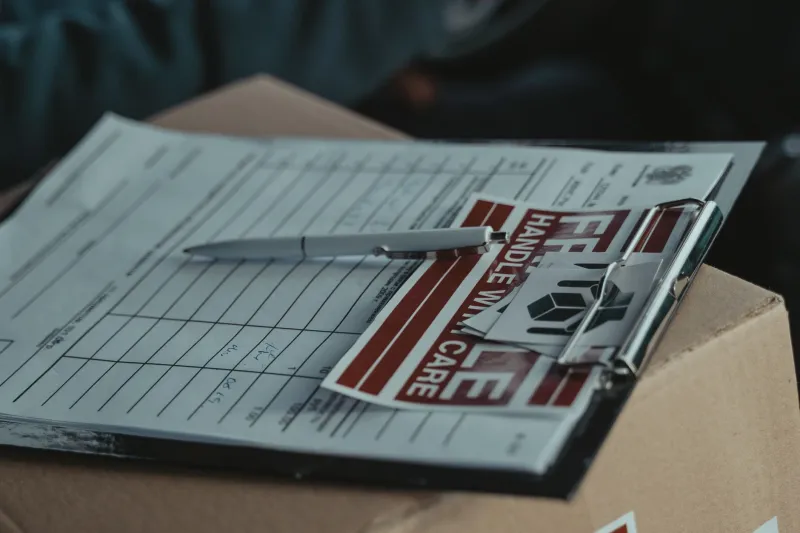
Each parcel should receive a durable tag with four fields: date received into the cage, reason code, named owner and next action with a due date. The tag does not need to be elaborate. It does need to survive a week of handling and remain legible at arm's length. Where a parcel already carries a carrier exception label, add the depot tag rather than replacing the original evidence.
Physical zoning matters. Split the cage into clearly marked sections: new exceptions awaiting triage, active cases with a named owner, parcels awaiting return to sender, and parcels awaiting disposal or charitable donation after the retention period. This prevents older cases from being buried by newer arrivals and makes the daily walk quicker.
The daily walk
A fifteen-minute walk at the same time each day is more effective than an occasional deep clean. Start with the oldest items and work forward. The audit lead should ask four questions of every parcel: is the reason still valid, is the owner still correct, is the next action still achievable, and has the customer been updated since the last review?
Clear rules reduce debate. Address-query parcels should be contacted within one working day, with a second attempt or return decision recorded by day three. Damaged parcels should be photographed, quarantined and either repacked, claimed or disposed of according to the carrier or insurer process. Refused parcels should move to return-to-sender within the agreed window. Unlabelled items should be held for a defined search period before disposal.
The governing rule is simple: no parcel leaves the cage without a next action and a date. That does not mean every parcel must leave the same day. It means every parcel must have a route. A parcel that is waiting for a customer reply is still under control if the reply date is recorded and the customer has been told what happens next.
From audit to queue
At the end of the week, convert the tags into a ledger. A spreadsheet is sufficient. Use columns for parcel reference, date received, reason code, owner, next action, due date, last customer update and status. Add age buckets: zero to one day, two to three days, four to seven days, and eight days or more. The eight-day bucket is usually where the real process failures sit.
Review the ledger at the daily despatch huddle. Keep the conversation short and factual: how many parcels are in the cage, how many are over their due date, and which owners need support. Set a daily clearance target that reflects available resource rather than aspiration. A cage of forty parcels with no owners will not be cleared by a target of forty; it will be cleared by assigning ten named actions and following them up tomorrow.
The audit also produces root-cause evidence. If address queries dominate, review address capture at checkout and the quality of pre-despatch validation. If damage is concentrated in certain packaging formats, review the packing standard. If refused deliveries cluster around particular routes or time windows, feed that back into carrier management. The cage is often the first place where a wider process problem becomes physical.
Customer communication should be part of the routine, not an afterthought. A short, plain update is better than silence: the parcel is held, the reason, what the customer needs to do and when they will hear next. Record the update in the ledger so that the next person does not repeat the same message or miss the promised follow-up.
Peak-proofing the exception flow
As peak 2026 approaches, give the cage a named owner for each shift and a handover note at the end of the day. Increase the frequency of the walk if volumes rise, but do not abandon the ledger. The ledger is the memory of the operation. Without it, the cage reverts to a graveyard where parcels are stored rather than managed.
A controlled queue is not a perfect operation. It is an operation that knows what it is holding, why it is holding it and when it will move. For UK despatch teams, that is a modest discipline with a disproportionate return: less wasted space, fewer customer queries, clearer accountability and a calmer route into the busiest weeks of the year.