Proof, Not Paper: A Practical Route to Digital Delivery Evidence for UK Depots
Photo: Unknown, Public domain, via Wikimedia Commons
Paper proof of delivery feels dependable because it is tangible. In practice, it is a fragile record. A signature can be illegible, a sheet can be misplaced at the depot, and a delivery note can be separated from the consignment record before the invoice is raised. When a customer says the goods never arrived, the question is not whether the driver remembers the drop. It is whether the business can produce credible evidence quickly.
That delay has two costs: disputes and cash flow. A digital proof of delivery process addresses both, and it does not require a wholesale systems replacement.
Where paper creates friction
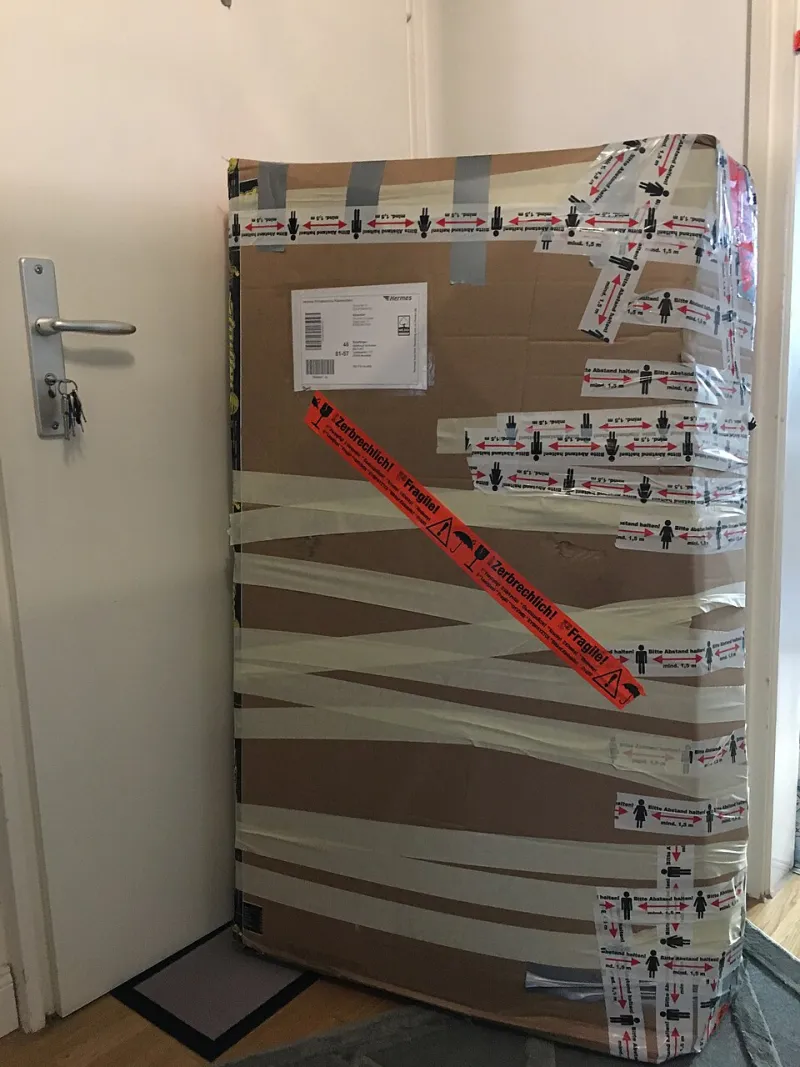
Paper PODs create friction at the point of retrieval. Credit control may have to ask the depot for a copy, the depot may have to search a filing cabinet, and the customer may have to wait. In the meantime, the invoice sits in aged debt. The same record may also be weak evidence: a scrawl on a sheet with no time, location or consignment reference is difficult to defend. For distributors handling regular B2B drops, the problem is compounded when a signature is collected at a reception desk but the consignment was later moved within the site.
None of this means paper is dishonest. It means paper is slow and incomplete.
What digital evidence must capture
A useful digital POD record links five elements: the consignment reference, the date and time of delivery, the recipient or delivery outcome, the evidence itself and the location. The evidence may be a signature on a device, a photograph of the parcel at the door, a photograph of the goods in a reception area, or a scanned note where the customer has instructed an unattended delivery. The record should also identify the driver, the vehicle or route, and any exception reason.
Data protection matters. Capture only what is needed for delivery and dispute resolution, restrict access to the back office, set a retention period and avoid photographing people or the inside of a customer's premises without a clear reason. A digital POD is operational evidence, not a surveillance archive.
Signatures, photos and geolocation in practice
Digital signatures are most reliable when the device prompts for a name and a signature, then locks the record to the consignment. Photo evidence works best with a standard: the parcel in frame, the door or signage visible, and the time and location captured automatically. Geolocation should be recorded at the point of delivery, not reconstructed later in the office. Timestamps should come from the device rather than manual entry.
Drivers need simple screens and offline capability. A depot with poor mobile coverage cannot rely on a live connection at the door. The app should store the record locally and upload when the driver returns or reconnects. The back office should see a clear exception queue for missing signatures, rejected photos or failed uploads.
Fewer disputes, faster invoices
The commercial benefit appears when credit control can answer an 'item not received' query within the same working day. If the POD is attached to the consignment record, the response is a link or a PDF, not a request to search the depot. That shortens the dispute cycle, reduces credit notes and helps the invoice move through the ledger. Over time, aged debt and days sales outstanding become more stable because fewer invoices are parked while evidence is found.
Digital evidence also improves driver coaching. If a route has repeated photo-quality failures or missing signatures, the depot can address the cause before it becomes a customer dispute. The data is a management tool, not just a compliance record.
A phased route for small depots
Start with one route, one depot or one customer group. Use existing smartphones or tablets where they are suitable, and choose an app that supports offline capture, photo compression and a simple export. Do not begin with a custom integration. A CSV export from the app into the consignment record is often enough for the first phase.
Phase one is capture and storage. Phase two is retrieval: give credit control and customer service a single place to search by consignment reference. Phase three is integration with the transport management or accounting system so that the POD status is visible without manual rekeying. Phase four is analysis: on-time evidence rates, dispute reasons and driver compliance. A small depot can stop at phase two and still gain most of the benefit.
Adoption is a process change
Drivers will adopt digital POD if the process is quicker than paper. Test the app in the rain, in poor light and at a loading bay. Agree a photo standard and a short exception code list. Tell customers what will happen: a signature may be captured on a screen, a photo may be taken, and a receipt can still be provided where required. Train the back office to handle missing evidence as an exception, not as a reason to blame the driver.
The measures that matter
Track the percentage of consignments with complete evidence, the time taken to retrieve a POD, the number of disputed invoices, credit notes raised, days sales outstanding and the resolution time for 'item not received' claims. Review these weekly during the pilot. A clean POD process should reduce the time spent proving delivery and shorten the cash conversion cycle.
Digital proof of delivery is not a luxury system for large carriers. For a UK distributor or small depot, it is a practical way to replace a fragile paper trail with evidence that is complete, searchable and ready when a customer or an invoice query arrives.