The Quiet Cost of Empty Space: A Parcel Packaging Audit for UK Businesses
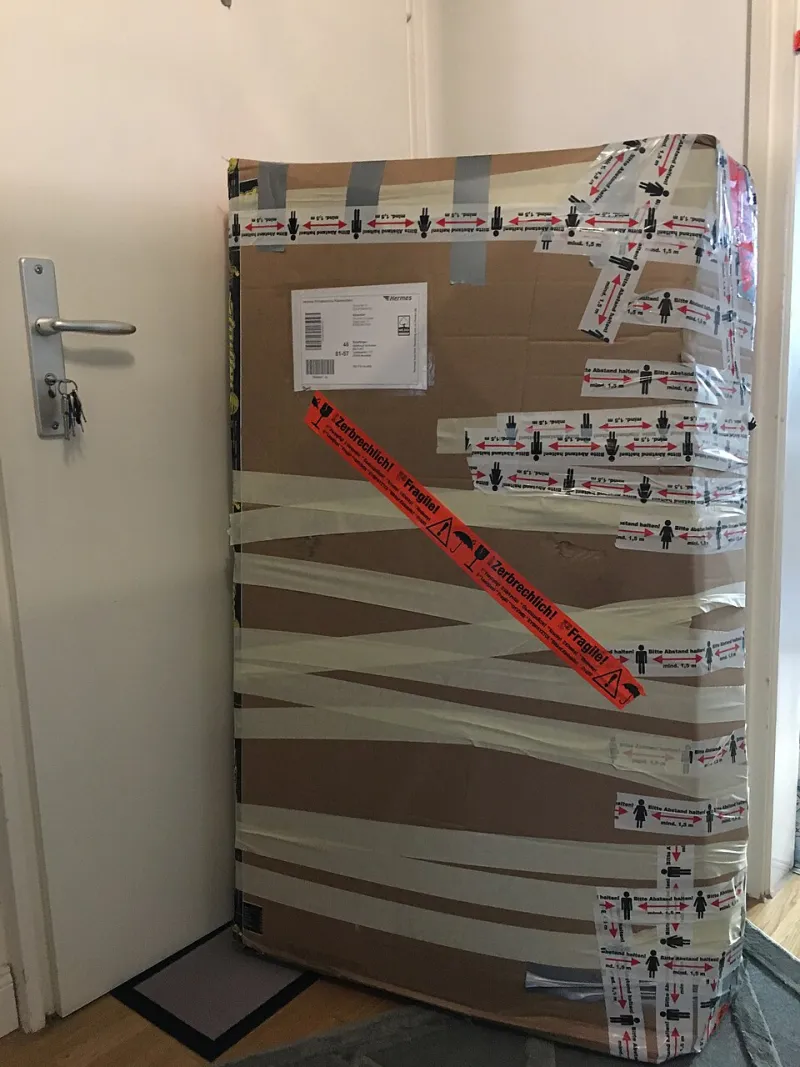
Photo: Pittigrilli, CC BY-SA 4.0, via Wikimedia Commons
For years, UK parcel pricing was explained in kilograms. Today, the more important number may be the one on your tape measure. A jumper, a lampshade and a box of crisps can weigh almost the same at the dispatch bench, yet attract very different carriage charges once a carrier applies volumetric, or dimensional, weight. For small and medium-sized businesses, this is not a technical footnote. It is a margin issue that begins with packaging choices and ends on the carrier invoice.
Why the scales tell only half the story
Carriers price the space a parcel occupies as well as the mass it contains. The standard calculation is length x width x height in centimetres, divided by a volumetric divisor. Common divisors in the UK market are 5,000 and 6,000, although some services use 4,000 or a different figure. Billable weight is usually the greater of actual weight and volumetric weight. Most carriers also round up to the next whole or half kilogram, and some round dimensions up to the nearest centimetre before calculating.
The practical effect is simple: a parcel can be light enough to carry under one arm and still be billed as though it were much heavier. That is not a hidden trick. It reflects the space the parcel takes up in a van, a hub sortation system and an aircraft hold. The problem for SMEs is that packaging decisions are often made by operations or marketing teams, while the cost consequence appears later on a carrier invoice.
Worked examples: the centimetre premium
Take a carton measuring 40 x 30 x 20 cm. Its volume is 24,000 cubic centimetres. At a 5,000 divisor, volumetric weight is 4.8 kg. At a 6,000 divisor, it is 4.0 kg. If the parcel actually weighs 3.2 kg, the carrier will bill the volumetric figure. At an illustrative £5.20 per billable kilogram, the difference between those two divisors is 0.8 kg, or £4.16 per parcel. Across 500 parcels, that is £2,080.
Now take a light but bulky item in a 60 x 40 x 30 cm box. The volume is 72,000 cubic centimetres. At a 5,000 divisor, volumetric weight is 14.4 kg against an actual weight of 2.1 kg. The extra 12.3 kg is empty space priced as cargo. At £5.20 per kg, the volumetric premium is £63.96 per parcel before any surcharge. At a 6,000 divisor it is 12.0 kg, which still leaves a £51.48 premium.
Small measurement differences matter too. A parcel measured at 41 x 31 x 21 cm has a volume of 26,691 cubic centimetres. At a 5,000 divisor that is 5.34 kg. The same parcel at 40 x 30 x 20 cm is 4.8 kg. One centimetre on each side can move a consignment into a higher band, especially when a carrier rounds up.
Where margin leaks on the packing bench
The usual culprits are oversized standard cartons, excessive void fill, double boxing and long narrow items that cannot be nested. Fashion returns, homeware, pet supplies and gift sets are common examples. A box that is too large may look more protective, but it can add billable weight without adding protection. A box that is too small may reduce carriage cost but increase damage and replacement costs. The aim is not the smallest possible pack. It is the smallest pack that protects the product reliably.
Multi-item orders deserve particular attention. Consolidating two parcels into one can reduce the number of consignments, but only if the combined box does not create a large volumetric penalty. Similarly, a branded outer box may be attractive to the customer, but if it sits inside another carton it is adding cube and cost at the same time.
A five-step packaging audit before your next carrier review
-
Pull 30 days of carrier invoices and match them to dispatch records. Choose at least 20 representative consignments across your product range, including your bulkiest and lightest lines.
-
Measure each parcel as the carrier would: external dimensions, in centimetres, with the box closed. Record actual weight and calculate volumetric weight using the divisor on your tariff. Flag any parcel where volumetric weight is more than 1.5 times actual weight.
-
Test one carton size down for your highest-volume products. Check whether the product still passes your damage and presentation standards. If it does, ask your packaging supplier for a trial run rather than switching everything at once.
-
Review void fill and multi-box rules. Replace loose fill with inserts or corner protection where it reduces cube. Consolidate multi-item orders only when the combined volumetric weight is lower than the separate parcels.
-
Model the tariff before negotiation. Ask your carrier which divisor applies to each service, how dimensions are captured, whether re-measurement is automated, and how billing disputes are handled. Request a written summary of rounding rules and minimum billable weights.
Negotiating with centimetres, not just kilos
A carrier review that focuses only on the headline rate can miss the bigger lever. A change in divisor, a more sensible rounding rule or a packaging-neutral trial can outweigh a small percentage discount. Ask whether the same divisor applies to all services, whether expedited or offshore services use a different figure, and whether fuel or remote-area surcharges are applied to volumetric charges. These details should be in the contract or tariff schedule, not left to an account manager's verbal explanation.
It is also worth asking how the carrier measures parcels in practice. Hub scanning can capture dimensions that differ slightly from the dispatch bench. If your team records 40 x 30 x 20 cm but the hub measures 41 x 31 x 21 cm, the invoice may tell a different story. A regular sample check, rather than a one-off audit, keeps both sides honest.
The bottom line
Packaging is a pricing decision. Every centimetre of unused space has a potential carriage cost, and every carton choice either protects margin or erodes it. Before the next carrier review, measure what you actually send, test one size down, and ask for the volumetric rules in writing. The businesses that treat the tape measure as seriously as the scales will usually be the ones that keep more of the margin.