The Twenty-First of December Problem: A Despatch Calendar Built Backwards
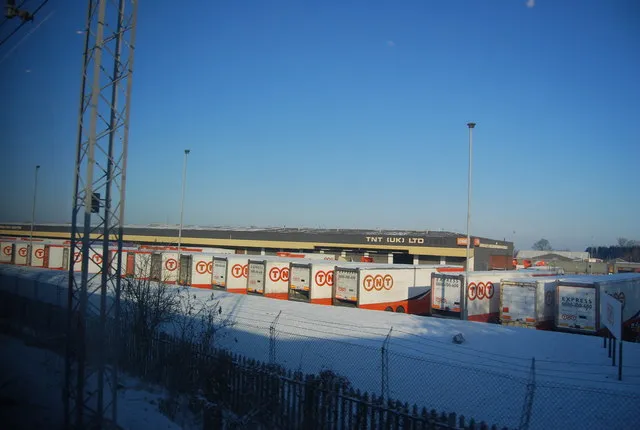
Photo: N Chadwick , CC BY-SA 2.0, via Wikimedia Commons
The complaint arrives in the first week of January, and it always has the same shape. The customer ordered on the twenty-first, the parcel arrived on the twenty-ninth, and the review says the delivery was late. Nowhere in the exchange does anyone mention that the last recommended posting date had already passed when the order was placed, because nobody told the customer at the point of sale.
The fix is not a better carrier. It is a calendar, agreed in November and written into the website in the first week of December.
The shape of December 2026
The month begins on a Tuesday and ends on a Thursday, which compresses the useful despatch days at both ends.
- Tuesday 1 December — first working day of the month.
- Monday 14 to Friday 18 December — the last full five-day despatch week.
- Monday 21 to Wednesday 23 December — final despatch window for premium services.
- Thursday 24 December — early closing; most networks run a reduced collection.
- Friday 25 December — Christmas Day, no collections.
- Saturday 26 December — Boxing Day, no collections.
- Monday 28 December — substitute bank holiday in lieu of Boxing Day, no collections.
- Tuesday 29 to Thursday 31 December — trading days, but with thin staffing at depots and reduced network capacity.
- Friday 1 January 2027 — New Year's Day, no collections.
The consequence is straightforward: there are effectively only seventeen full despatch days in the month, and three of the last five working days fall after the practical deadline for standard services.
Dates to plan against, and to verify
Royal Mail publishes its last recommended posting dates in the autumn. The recent pattern places Second Class around the Saturday before Christmas and First Class around the Monday, with Special Delivery extending by a further two days. Applied to 2026, that points to Saturday 19 December for Second Class, Monday 21 December for First Class and Wednesday 23 December for Special Delivery.
Treat these as planning assumptions, not gospel. Confirm against the published schedule before anything is printed, and confirm again with the carrier account manager in the first week of December, because collection times at your local depot may differ from the national guidance.
Courier networks are separate. Most next-day operators will advertise a final pre-Christmas collection on 22 or 23 December, with premium and timed services extending to the twenty-third. Where a carrier applies a volume cap to your account in peak, the cap matters more than the advertised date, so ask for it in writing.
The despatch desk checklist
Work backwards from the last collection rather than forwards from today.
- By 4 December: freeze the checkout delivery estimates for the remainder of the month and stop any promotion that implies a faster service than the network can support.
- By 7 December: publish the customer-facing cut-off table on the site, in the confirmation email and on the tracking page.
- From 14 December: hold a daily fifteen-minute capacity review covering order backlog, packaging stock, label stock and van availability.
- From 14 December: move the held-parcel and exception sweep to twice daily. A parcel sitting unresolved on the nineteenth is unlikely to be recovered before January.
- By 18 December: confirm staffing for 21 to 24 December and 29 to 31 December, and cancel leave requests in the despatch team for those days.
- By 18 December: pre-print labels for known repeat consignments and pre-pack any fixed-content contract packs.
- Throughout: record the actual time of the last collection each day. It will move, and the basket page should move with it.
Buffer days worth building in
Build two buffer days into every standard-service promise from the second week of December, and one into express promises. These are not pessimism; they are the mechanism by which a single day of snow in the Midlands or a motorway closure on the M6 does not become a customer complaint.
Where the weather forecast is poor, the buffer should be applied before the disruption rather than after it. Announce a revised cut-off on the morning it becomes likely, not the afternoon it becomes obvious.
Telling customers before they ask
A customer who is told the deadline in advance rarely complains about it. A customer who discovers it after paying feels misled, even when the delivery was never promised.
The message belongs in five places: a site banner with the cut-off date, the product page for anything made to order, the basket page with a live countdown, the order confirmation email, and the dispatch notification. Keep the wording consistent across all five, and phrase it as a date plus a condition — order by Monday 21 December for delivery before Christmas — rather than as a vague assurance.
For anything ordered after the standard cut-off, offer the honest alternative: a named premium service with its own date, or collection from the depot in the new year. Both are better than a silent promise that quietly expires.
After the last collection
Finally, plan the other end of the month. Returns will begin arriving in the first week of January, and the reverse flow needs a desk, a scanning routine and a restocking rule ready before it starts. A December that ends with a clean despatch record and an unprepared returns process has only moved the problem forward by a fortnight.