The Custody Gap: A Building-Led Evidence Standard for UK Despatch Teams
Proof of delivery has become one of the most over-recorded and under-examined parts of UK despatch. A driver captures a squiggle on a screen, a photograph of a door, and a timestamp. The record is complete in the system. Whether it demonstrates custody is another matter. In multi-occupancy buildings — converted flats, purpose-built blocks, houses in multiple occupation, serviced offices and student halls — the person who signs is often not the person who ordered, the door in the photograph may not be the door that matters, and the parcel may pass through two or three hands before it reaches the occupier. When a customer says the item never arrived, the evidence file can look full without answering the only question that counts: who had control of the parcel, and where?
Why the standard protocol breaks down
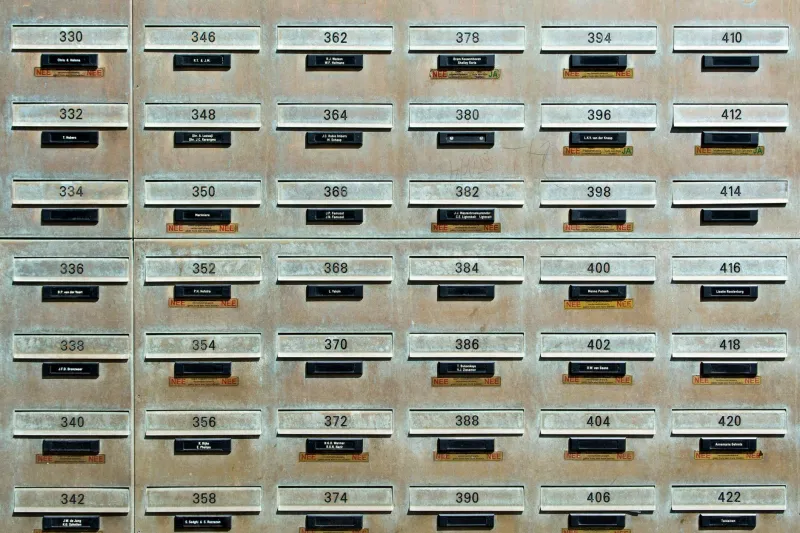
The conventional signature-and-photo protocol was designed for a simple handover: one address, one occupier, one recipient. Multi-occupancy buildings break that assumption in predictable ways. A concierge may sign for a pallet of parcels in a single movement, with no item-level check. A parcel room may accept deliveries into a locked store without scanning each label. A neighbour may agree to take a parcel 'for next door' and then go out. In a serviced office, a mailroom team may sign for dozens of items addressed to different tenant businesses, and the occupier may not see the parcel for days.
Photographs compound the problem. A picture of a parcel against a grey carpet proves that a parcel was once in a building. It does not prove which flat, which floor, which reception point, or whether the item was left in a secure area or a communal corridor. In a dispute, the customer is not asking whether a photograph exists. They are asking whether the delivery record can show authority, location and continuity. Too often, it cannot.
The answer is not more photographs or longer signature boxes. It is a building-led evidence standard: a framework that matches the proof required to the custody risk of the building, rather than applying one doorstep protocol to every address in the round.
A tiered evidence framework by building type
Despatch teams can begin by classifying delivery points into four evidence tiers. The tiers are not about postcode prestige or property value. They are about the number of custody transitions between the van and the occupier.
| Building profile | Custody risk | Minimum evidence pack | Key control |
|---|---|---|---|
| Single-occupancy premises with a named recipient | Low | Recipient name, signature or typed confirmation, time, geotagged photo showing premises name or number | Recipient authority checked against order where possible |
| Low-rise converted flats or shared hallway, no concierge | Medium | Photo showing flat number or door, recipient name if handed over, or a neighbour record with neighbour address and time | No unrecorded leaving in communal hall; neighbour acceptance logged as an exception |
| Purpose-built block with concierge or parcel room | High | Item-level scan into the parcel room, concierge name and staff identifier, photo of labelled item in the store, occupier notification | Bulk signatures not accepted as sole evidence |
| Serviced offices, HMOs, student halls and mailroom-managed sites | High | Named mailroom recipient, item-level log entry, photo against room or bay label, tenant or occupier notification | Written building agreement covering acceptance and handover |
For the first tier, the existing protocol is broadly adequate, provided the photograph shows the premises identity and the signature belongs to someone with authority to accept. For the second tier, the critical addition is precision of place. A photograph of a flat door is useful only if the door number is visible. A neighbour handover is acceptable only if the neighbour's address and the time are recorded, and the occupier is told. For the third and fourth tiers, the standard must move from signature capture to item-level custody. A concierge's signature for forty parcels is not proof for any one of them.
Five fields that should appear on every record
Whatever the building type, five fields do most of the work in a dispute. The first is recipient identity and authority: who took the parcel, and on what basis. The second is precise location within the building: not merely the street address, but the flat, floor, reception point, parcel room bay or mailroom. The third is time and date of the handover or storage. The fourth is method: handed to recipient, left with named neighbour, stored in parcel room, or accepted by mailroom. The fifth is condition at handover, recorded as a simple standard rather than a free-text essay.
These fields turn a delivery record into a custody record. They also make exception handling more honest. If a driver cannot obtain a signature from the occupier and the building has no authorised acceptance point, the correct outcome is a recorded exception and a reattempt — not a photograph of a hallway and a hopeful scan.
Making the framework operational
A framework is only useful if it reaches the despatch desk and the driver's handheld. Start with a building register for regular delivery points: note the building type, the acceptance point, the managing agent or concierge contact, and the evidence tier. Add simple prompts to the driver workflow: 'Is this a parcel room or a reception?' 'Record the flat or bay number.' 'If left with a neighbour, record the neighbour address.' Add exception codes for refused acceptance, no authorised recipient, and parcel room full. Audit a sample of high-risk building deliveries each week, checking not whether a photograph exists but whether the five fields are complete and consistent.
Data protection matters here as much as operational control. Record only what is needed to prove custody. Avoid capturing images of communal areas beyond the parcel and the identifying door or bay. Keep records for a defined period that matches your dispute cycle, and restrict access to those who need it.
Conclusion
The signature nobody checks is a symptom, not the disease. The underlying problem is that despatch teams have applied a single-occupancy evidence model to buildings where custody changes hands several times before the occupier sees the parcel. A tiered framework by building type gives UK despatch teams a more defensible position: less reliance on the theatre of signature capture, more attention to authority, location and item-level continuity. Proof of delivery should not merely exist on file. It should be capable of answering the question a customer will eventually ask.